
28 April 2026
Axe vs Hatchet vs Tomahawk: What's the Difference?
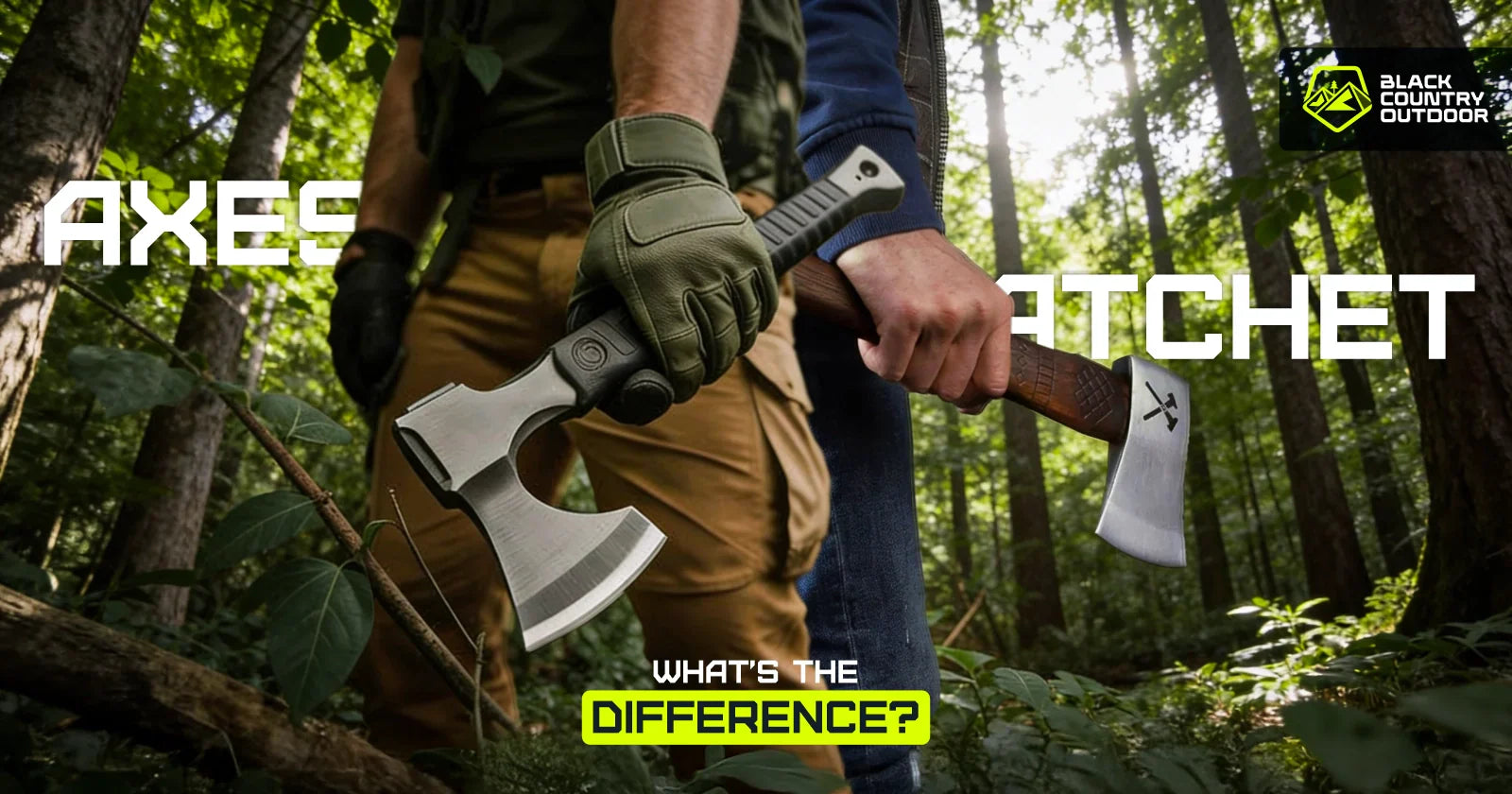
If you've ever stood in the hardware aisle wondering whether you need a splitting axe, a camping hatchet, or a tactical tomahawk, you're not alone. These three tools look similar but serve very different purposes, and choosing the wrong one can turn a simple task into a frustrating (or even dangerous) experience.
In this comprehensive guide, we'll break down the axe vs hatchet vs tomahawk debate with clear comparisons, real-world use cases, and expert recommendations to help you pick the perfect tool for camping, bushcraft, home improvement, or survival situations.
BlackCountryOutdoor offers a wide range of axes, hatchets, and tomahawks, from budget-friendly picks to premium tools, helping you choose the right option whether you're splitting wood, handling camp tasks, or exploring the key differences between each.
Table of Contents
- Quick Comparison: Axe vs Hatchet vs Tomahawk
- What Is an Axe? Types and Best Uses
- What Is a Hatchet? The Compact Workhorse
- What Is a Tomahawk? History Meets Modern Tactical Design
- Head-to-Head Comparison Chart
- Which One Should You Buy? (Use-Case Scenarios)
- Top-Rated Picks for 2026
- Safety Tips and Maintenance
- Frequently Asked Questions
Quick Comparison: Axe vs Hatchet vs Tomahawk
| Feature | Axe | Hatchet | Tomahawk |
|---|---|---|---|
| Handle Length | 28–36 inches | 12–18 inches | 12–20 inches |
| Weight | 3–6 lbs | 1–2.5 lbs | 1–2 lbs |
| Best For | Felling trees, splitting firewood | Camping, kindling, light chopping | Throwing, tactical use, breaching |
| Swing Style | Two-handed | One or two-handed | One-handed |
| Portability | Low | High | Very High |
| Price Range | $40–$200 | $25–$100 | $30–$250 |
What Is an Axe? Types and Best Uses
An axe is the heavyweight of the group, designed for maximum power and efficiency when dealing with large logs and trees. The long handle provides leverage, while the heavier head generates the force needed to split dense hardwood.

Common Types of Axes
Splitting Axe The best splitting axe features a wedge-shaped head that forces wood fibers apart rather than cutting through them. If you're processing firewood for winter, this is your go-to tool. Popular options include the Fiskars X27 and Gransfors Bruk Splitting Axe.
Felling Axe Designed for cutting across the grain of standing trees, a felling axe has a thinner, sharper blade. It's the tool of choice for lumberjacks and anyone clearing land.
Double Bit Axe With a blade on both sides, the double bit axe offers versatility, one side sharp for felling, the other slightly duller for splitting. It's a classic choice for professional woodsmen.
When to Choose an Axe
- Processing large amounts of firewood
- Felling trees or clearing brush
- Heavy-duty woodworking or timber framing
- Situations where power matters more than portability
Pro Tip: For most homeowners, a splitting maul (a heavier cousin of the splitting axe) is even better for dense hardwoods like oak and hickory.
What Is a Hatchet? The Compact Workhorse
A hatchet is essentially a mini-axe. With a shorter handle and lighter head, it's designed for one-handed use and tasks that require precision rather than brute force. If you're looking for the best camping hatchet, this is your category.
Key Characteristics of a Hatchet
- Handle Length: Typically 12–18 inches
- Weight: Around 1–2 pounds
- Versatility: Can be used for chopping, hammering (with the poll), and detailed work
Best Uses for a Hatchet
- Camping and backpacking (lightweight and packable)
- Making kindling and small firewood
- Trail maintenance and clearing small branches
- Hammering tent stakes (using the back of the head)
- Bushcraft projects like carving spoons or building shelters
Top Hatchet Recommendations
- Gransfors Bruk Wildlife Hatchet – Premium Swedish steel, unbeatable quality
- Fiskars X7 Hatchet – Affordable, durable, and nearly indestructible
- Husqvarna 13" Wooden Handle Hatchet – Classic feel at a budget price
Hatchet vs Axe for Camping: If you're car camping with lots of firewood to process, bring an axe. If you're backpacking or only need small pieces, a hatchet is the smarter choice.
What Is a Tomahawk? History Meets Modern Tactical Design
The tomahawk has deep roots in Native American history, but modern versions have evolved into specialized tools for tactical, survival, and recreational throwing. Unlike axes and hatchets, which prioritize chopping efficiency, tomahawks are designed for balance, versatility, and rapid deployment.
What Makes a Tomahawk Different?
| Feature | Tomahawk | Hatchet |
|---|---|---|
| Head Design | Often has a spike, hammer, or pry bar on the back | Flat poll for hammering |
| Handle Attachment | Slides over the top (easier to replace) | Wedged into the eye |
| Balance | Center-balanced for throwing | Front-heavy for chopping |
| Materials | Often synthetic handles (G-10, nylon) | Wood or composite |
| Primary Purpose | Throwing, breaching, combat | Wood processing |
Modern Tomahawk Uses
- Axe-throwing competitions and recreational venues
- Tactical breaching (law enforcement and military)
- Survival situations (light chopping, digging, prying)
- EDC (Everyday Carry) for outdoor enthusiasts
Best Tomahawks for 2026
- SOG Tactical Tomahawk: Lightweight and affordable entry point
- Cold Steel Trench Hawk: Durable and throwing-optimized
- Gerber Downrange Tomahawk: Premium tactical option with pry bar and hammer
- CRKT Woods Chogan T-Hawk: Bushcraft-focused with hammer poll
Tomahawk vs Hatchet for Survival: Choose a hatchet if you need to process firewood efficiently. Choose a tomahawk if you want a multi-tool for throwing, breaching, and light chopping.
Head-to-Head Comparison Chart
| Scenario | Winner | Why |
|---|---|---|
| Splitting firewood | Axe | Longer handle = more power per swing |
| Backpacking/camping | Hatchet | Lightweight and versatile |
| Axe throwing | Tomahawk | Balanced design and replaceable handles |
| Self-defense/tactical | Tomahawk | Designed for combat and breaching |
| Making kindling | Hatchet | Precise, one-handed control |
| Felling trees | Axe | Only tool with enough leverage |
| Budget pick | Hatchet | More affordable across the board |
| Bushcraft/shelter building | Hatchet | Better for detailed carving work |
Which One Should You Buy? (Use-Case Scenarios)
1. You're a Camper or Backpacker
Get a hatchet. The best camping hatchet (like the Fiskars X7 or Gransfors Bruk Wildlife Hatchet) is light enough to carry on the trail but capable enough to process small firewood and hammer stakes.
2. You Heat Your Home with Firewood
Get a splitting axe. A dedicated splitting axe or splitting maul will save you time and energy. Look for options with shock-absorbing handles like the Fiskars X27.
3. You Want to Try Axe Throwing
Get a tomahawk. Most axe-throwing venues use tomahawks or specialized throwing axes. The SOG Tactical Tomahawk or Cold Steel Throwing Hawk are great starter options.
4. You're Building a Bug-Out Bag
Get a hatchet OR tomahawk. A hatchet is better for firewood, but a tactical tomahawk offers more versatility (prying, breaching, self-defense). The Gerber Downrange is a popular survival tomahawk choice.
5. You Need a Multi-Tool for Home and Yard
Get a hatchet. It's the most versatile of the three for everyday tasks, chopping small branches, driving stakes, and light demolition.

Top-Rated Picks for 2026
Best Splitting Axe: Fiskars X27 Super Splitting Axe
- Price: ~$70
- Weight: 5.85 lbs
- Why it wins: Virtually unbreakable FiberComp handle, excellent power transfer, lifetime warranty
Best Camping Hatchet: Gransfors Bruk Wildlife Hatchet
- Price: ~$140
- Weight: 1.3 lbs
- Why it wins: Hand-forged Swedish quality, razor-sharp edge, compact enough for backpacking
Best Budget Hatchet: Fiskars X7 Hatchet
- Price: ~$30
- Weight: 1.4 lbs
- Why it wins: Indestructible design, great edge retention, unbeatable value
Best Tactical Tomahawk: Gerber Downrange Tomahawk
- Price: ~$250
- Weight: 1.9 lbs
- Why it wins: Integrated pry bar, hammer head, and breaching spike built for professionals
Best Throwing Tomahawk: Cold Steel Trench Hawk
- Price: ~$60
- Weight: 1.6 lbs
- Why it wins: Durable polymer handle, balanced for accuracy, affordable price point
Safety Tips and Maintenance
Essential Safety Rules
-
Always wear safety glasses: Wood chips can fly unpredictably.
- Clear your swing zone: Ensure no obstacles or people are within your arc.
- Use a stable chopping surface: A chopping block prevents glancing blows.
- Never use a dull blade: A sharp tool is safer than a dull one.
- Store in a sheath: Protect the edge and prevent accidents.
Maintenance Checklist
- Sharpen regularly with a file or whetstone
- Oil wooden handles to prevent cracking
- Check for loose heads before each use
- Store in a dry place to prevent rust
Frequently Asked Questions
1. Can I use a hatchet to split firewood?
You can split small, softwood pieces with a hatchet, but it's inefficient for large or hardwood logs. For serious firewood processing, use a splitting axe or splitting maul.
2. Is a tomahawk better than a hatchet for survival?
It depends. A tomahawk is more versatile (throwing, prying, breaching), but a hatchet is better for processing firewood and camp tasks. For pure survival, many experts prefer a hatchet.
3. What's the difference between a hatchet and a hand axe?
The terms are often used interchangeably, but a hand axe typically refers to prehistoric stone tools. In modern usage, "hatchet" is the correct term for a small, one-handed axe.
4. Can I throw a regular hatchet?
You can, but it's not recommended. Tomahawks are designed with balance and weight distribution optimized for throwing. Regular hatchets are front-heavy and harder to stick consistently.
5. What's the best axe for a beginner?
The Fiskars X7 Hatchet is the best affordable, durable, and versatile hatchet for camping and yard work.
Final Verdict: Axe vs Hatchet vs Tomahawk
| If You Need... | Choose This |
|---|---|
| Raw power for big jobs | Axe |
| Versatility and portability | Hatchet |
| Throwing, tactical, or multi-tool use | Tomahawk |
There's no single "best" tool; it all comes down to your specific needs. Most outdoor enthusiasts eventually own all three, but if you're starting out, a quality camping hatchet offers the best balance of utility and value.