
17 April 2026
The Complete Guide to Camping Fire Starters: Essential Tools, Tinder Options & Techniques for Cooking, Warmth & Emergency Survival
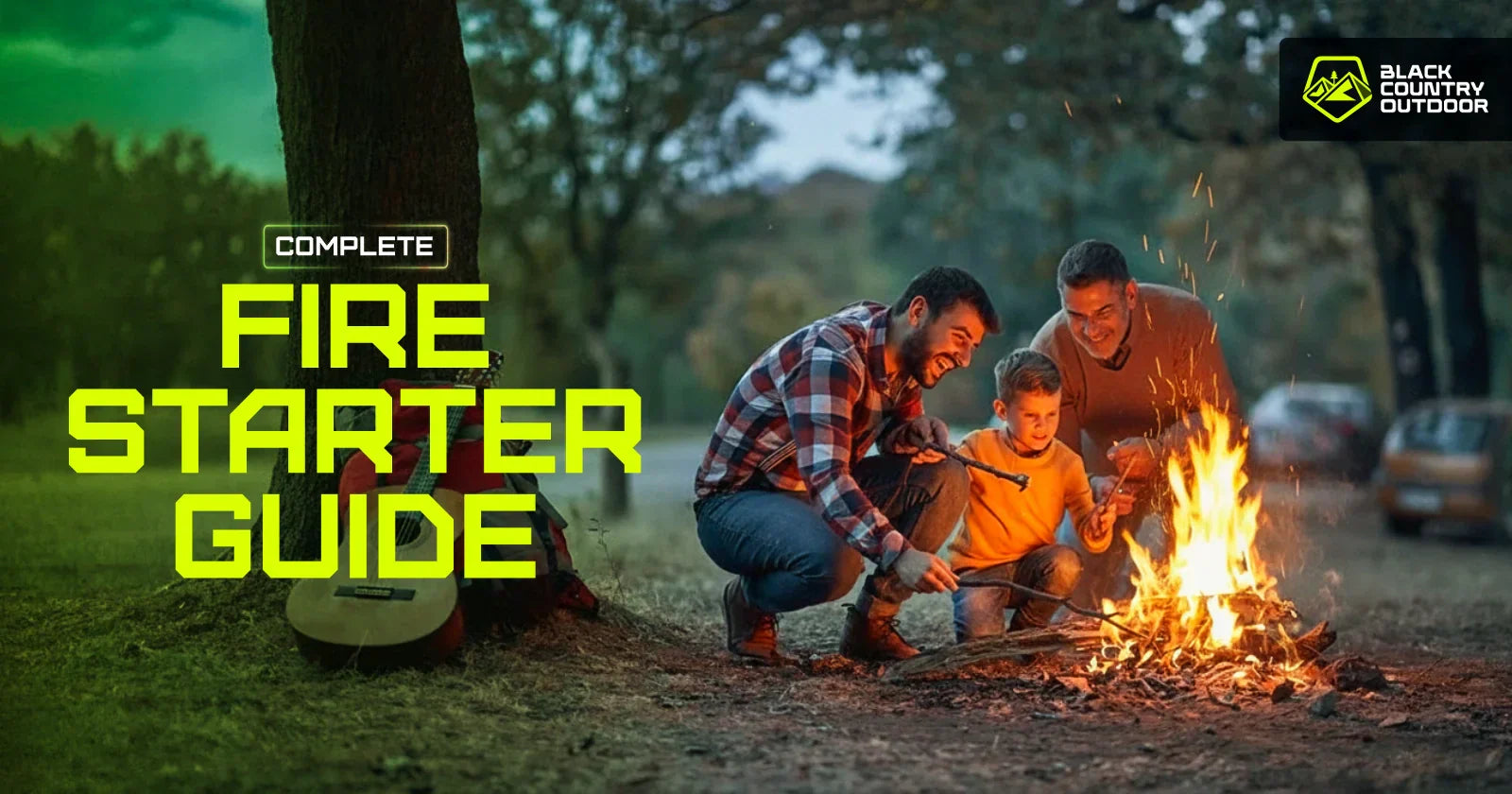
Your one-stop resource at BlackCountryoutdoor for choosing reliable fire-starting gear from the industry's most trusted brands
Why Fire Starting Matters More Than You Think
There's something primal about building a fire. It's warmth on a cold night, the ability to cook a hot meal after miles of hiking, and a psychological comfort that connects us to thousands of years of human history. But here's the reality: fire starting isn't just about convenience, it's about safety and self-reliance.
Whether you're a weekend car camper or a multi-day backpacker, the ability to start a fire in wet, windy, or high-altitude conditions can mean the difference between a memorable trip and a miserable one. At BlackCountryoutdoor, we curate gear from the most trusted brands in the outdoor industry so you can focus on the adventure, not the struggle.
This guide covers everything: from ferro rods that work when soaking wet to tinder that catches a spark in a snowstorm, plus the techniques to use them for cooking and emergencies.

Part 1: Primary Ignition Methods
Ferrocerium Rods (Ferro Rods)
Best for: Reliability, all-weather performance, long-term value
Ferro rods are the gold standard for serious outdoor enthusiasts. Unlike lighters that can leak fuel or matches that get soggy, a ferro rod throws 5,000°F sparks even when completely submerged in water. Brands like Exotac and UCO offer rods rated for 3,000 to 20,000 strikes, making them essentially lifetime tools.
Key features to look for:
- Striker/scraper quality: A good carbon steel scraper makes all the difference
- Handle material: G10 or aluminum handles provide grip even with cold, wet hands
- Lanyard holes: For securing to your pack or neck carry
- Multi-function designs: Some include compasses, whistles, or bottle openers
Pro tip: Practice your scraping technique before your trip. The key is pushing the rod away from your tinder, not pulling it toward you. This creates a shower of molten metal that ignites tinder instantly.
Stormproof & Waterproof Matches
Best for: Quick ignition, backup reliability, group camping
When you need fire now, nothing beats a match. But standard kitchen matches fail in moisture or wind. Stormproof matches from brands like UCO feature:
- Extra-long burn times (up to 15 seconds)
- Wind resistance up to 80 mph
- Waterproof strikers and sealed containers
- Some models include integrated strikers on the container exterior
Storage matters: Even "stormproof" matches fail if the striker gets wet. Store them in a waterproof case with a secondary striker, and consider vacuum-sealing for long-term storage in your emergency kit.
Electric & Plasma Lighters
Best for: Windproof ignition, USB rechargeability, altitude performance
Plasma lighters have revolutionized fire starting. Using electric arcs instead of flame, they work in:
- High winds (the arc can't be blown out)
- High altitudes (where butane lighters fail)
- Wet conditions (IP56+ waterproof ratings available)
Top considerations:
- Battery life: Most offer 100-300 lights per charge
- Solar compatibility: Pairs perfectly with portable solar panels for extended trips
- Dual-arc vs. single-arc: Dual arcs light larger surface areas faster
- Emergency use: Some models include flashlights and emergency whistles
Limitation: They require battery power. Always carry a backup method.
Traditional Flint & Steel
Best for: Historical interest, ultralight purists, skill development
The original fire starter. Flint and steel create sparks around 800°F, hot enough to ignite char cloth or certain fungi, but requiring more skill and specific tinder preparation. While not the most practical for beginners, it's a valuable backup that never runs out of fuel and works in any climate.
Part 2: Tinder & Kindling: the Critical Middle Step
Having a spark is useless without something to catch it. Professional outdoor guides carry multiple tinder types because conditions change.
Commercial Tinder Options
Tinder sticks and cubes: Brands like Coghlan's and UCO offer compressed tinder that lights with a single spark, burns for 5-7 minutes, and works even after water submersion. These are ideal for emergency kits.
Fatwood: Resin-impregnated pine wood that ignites easily and burns hot. Sourced from stump wood, it's natural, sustainable, and effective. Shave thin curls for tinder or use larger pieces as kindling.
Hemp rope: Unraveled hemp fibers catch sparks exceptionally well and burn longer than cotton. Many campers dip rope ends in wax for waterproof, portable tinder bundles.
DIY Tinder Solutions
Vaseline-soaked cotton balls: The classic budget option. Petroleum jelly extends burn time to 5+ minutes while repelling water. Store in a film canister or pill bottle.
Wax-infused dryer lint: Collect lint, mix with melted paraffin wax, and form into balls or sticks. Burns hot and long, essentially free to make.
Char cloth: Made by burning cotton fabric in an oxygen-starved container, char cloth catches the faintest spark and holds an ember. Essential for flint and steel users.
Natural Tinder Sources
Learn to identify these in the field:
- Birch bark: Peels like paper, contains oils that ignite easily
- Cattail fluff: Explosive ignition, but burns very fast, use as an accelerant
- Pine needles: Work when dry, resinous varieties burn best
- Old man's beard (lichen): Grows on trees, catches sparks readily
- Dry grasses: Bundle tightly for best results
Critical skill: Always gather tinder before you need it. In wet conditions, search under overhangs, inside hollow logs, or collect from standing deadwood rather than the ground.
Part 3: Fire Starting for Cooking Applications
Stove Ignition
Modern backpacking stoves from brands like MSR, Jetboil, and Primus require reliable ignition. While many have piezo igniters, these fail over time. Carry a mini ferro rod or stormproof matches as backup, especially for remote trips where stove failure means cold meals.
Efficiency tip: Preheat your stove with a small amount of tinder if using liquid fuel in cold weather. This improves vaporization and reduces priming time.
Open Fire Cooking
For campfire cooking, you need sustained, controllable heat:
The teepee method: Best for quick boiling water. Build a cone of kindling around your tinder, leaving an opening for air and ignition. As it collapses, add larger fuel.
The log cabin method: Superior for cooking. Stack fuel in a square, leaving a center space for tinder. Creates stable platforms for pots and consistent heat.
The Dakota fire hole: Two connected holes, one for firewood, one for airflow. Burns hot, uses less fuel, and is less visible (useful in sensitive areas).
Cooking-specific considerations:
- Hardwoods (oak, maple) produce coals ideal for grilling
- Softwoods (pine, spruce) burn fast and smoky, good for boiling, poor for steaks
- Always use a grill grate or tripod for stability
- Keep a spray bottle or water nearby for flare-ups
Charcoal & Fire Pit Alternatives
For car camping, consider BioLite fire pits or traditional charcoal setups. These offer cooking consistency with less fire management, though they require carrying fuel.
Part 4: Emergency & Survival Applications
The Redundancy Rule
Survival experts follow the "two is one, one is none" rule. Your fire kit should include:
- Primary method (ferro rod or lighter)
- Backup method (different type, stored separately)
- Tinder in a waterproof container
- Knowledge of natural alternatives
Wet Weather Techniques
When everything is soaked:
- Find standing deadwood: branches that died while attached, kept off the wet ground
- Split wood: the interior of logs stays dry even in rain
- Feather sticks: shave thin curls from sticks, exposing dry inner wood
- Use resinous wood: pine, spruce, and fir burn even when damp
- Build a platform: lay dry bark or branches on wet ground before building your fire
High-Altitude Considerations
Above 10,000 feet:
- Oxygen is scarce: use more tinder and gentler blowing
- Temperatures drop faster: prioritize wind protection
- Butane lighters fail: switch to ferro rods or plasma lighters
- Wood burns faster: gather 3x your normal fuel supply
Signal Fires
In emergency situations, fire becomes communication:
- Three fires in a triangle is the universal distress signal
- Green vegetation creates white smoke visible for miles
- Rubber or plastic (toxic but effective) creates black smoke against snow
- Night signals: Build large fires in open areas, not under tree cover
Part 5: Building Your Complete Fire Kit
The Minimalist Kit (Ultralight Backpacking)
- 1 ferro rod with integrated striker
- 10 stormproof matches in a waterproof case
- 6 cotton balls in petroleum jelly (film canister)
- Total weight: under 3 ounces
The Standard Kit (Weekend Camping)
- Ferro rod + lighter combo tool
- 20 stormproof matches
- Commercial Tinder Sticks (6-pack)
- Char cloth tin
- Total weight: 6-8 ounces
The Expedition Kit (Remote/Extended Trips)
- Primary ferro rod (large)
- Backup ferro rod (mini)
- Plasma lighter (rechargeable)
- 40 stormproof matches (two containers)
- Fatwood bundle
- DIY tinder (cotton/wax)
- Emergency flares (for extreme situations)
- Total weight: 12-16 ounces
Part 6: Safety & Leave No Trace
Fire Safety Essentials
- Clear a 10-foot radius around your fire site
- Keep water or dirt within reach for extinguishing
- Never leave unattended, a breeze can spread embers in seconds
- Extinguish completely, drown, stir, and feel for heat. If it's too hot to touch, it's too hot to leave.
Leave No Trace Principles
- Use established fire rings when available
- In pristine areas, use a fire pan or mound fire to prevent ground scarring
- Collect only downed, dead wood; never cut live trees
- Burn wood to ash and scatter cool ashes widely
- Consider a camp stove in high-use or sensitive areas

Curated Gear at BlackCountryoutdoor
At BlackCountryoutdoor, we don't manufacture gear; we curate the best from brands that have proven themselves in the field. Our fire-starting collection includes:
- Ferro rods from Exotac, UCO, and Light My Fire
- Stormproof matches by UCO and Coghlan's
- Plasma lighters from top electronics brands
- Tinder options, including Fatwood, Tinder Sticks, and hemp rope
- Complete kits for every skill level and trip type
Every product we stock has been evaluated for reliability, weight, and real-world performance. Whether you're cooking breakfast at a established campground or building an emergency fire in a downpour, we have the tools to get it done.
Final Thoughts: Master the Skill, Not Just the Gear
The best fire starter in the world is useless without practice. Before your next trip:
- Test your gear in your backyard in wet conditions
- How long it take to boil water with your setup
- Practice the feather stick technique until you can make consistent curls
- Try lighting a tinder with your non-dominant hand
- Build a fire without using matches or lighters
Fire starting is a skill that compounds. The more you practice, the more confident you become, and the lighter your pack gets as you realize you need less gear to achieve the same result.
Visit BlackCountryoutdoor to explore our complete fire-starting collection and find the perfect setup for your next adventure.
Stay warm, stay safe, and leave no trace.
[#]
[@]